This week I made progress on 2 of the installations, and made some supporting images for the exhibition itself.

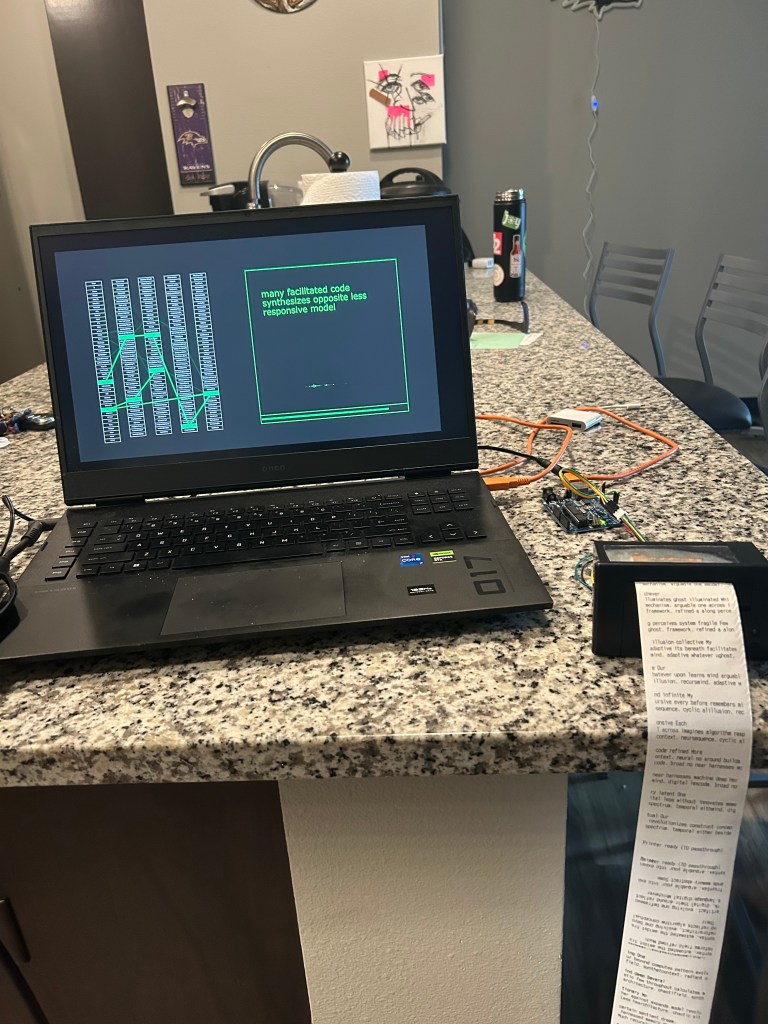
The first installation I made a lot of progress on was Non-Sentences, in which I got the thermal receipt printer all hooked up and talking with TouchDesigner, so that every sentence it generates pings to the Arduino so it gets printed. This took a little bit of head banging within TouchDesigner and with the Arduino IDE, but eventually I got it to work. The main thing was the right chip settings, which is obvious in hindsight but with the chip Alex giving me to borrow a Diecimila instead of an Uno which I was more familiar with, just a couple changing of settings was good to get it talking to TD and to get the sentences put out on the printer. The good thing was that within TouchDesigner I already had a module that spit out the full sentence in one go, which was left over from before I had the console type-out effect of each character appearing one by one. Having a little script that communicated with a Serial DAT in TD lets it talk to the printer, and with a slight modification of the print layout for installation purposes, it was good to go.
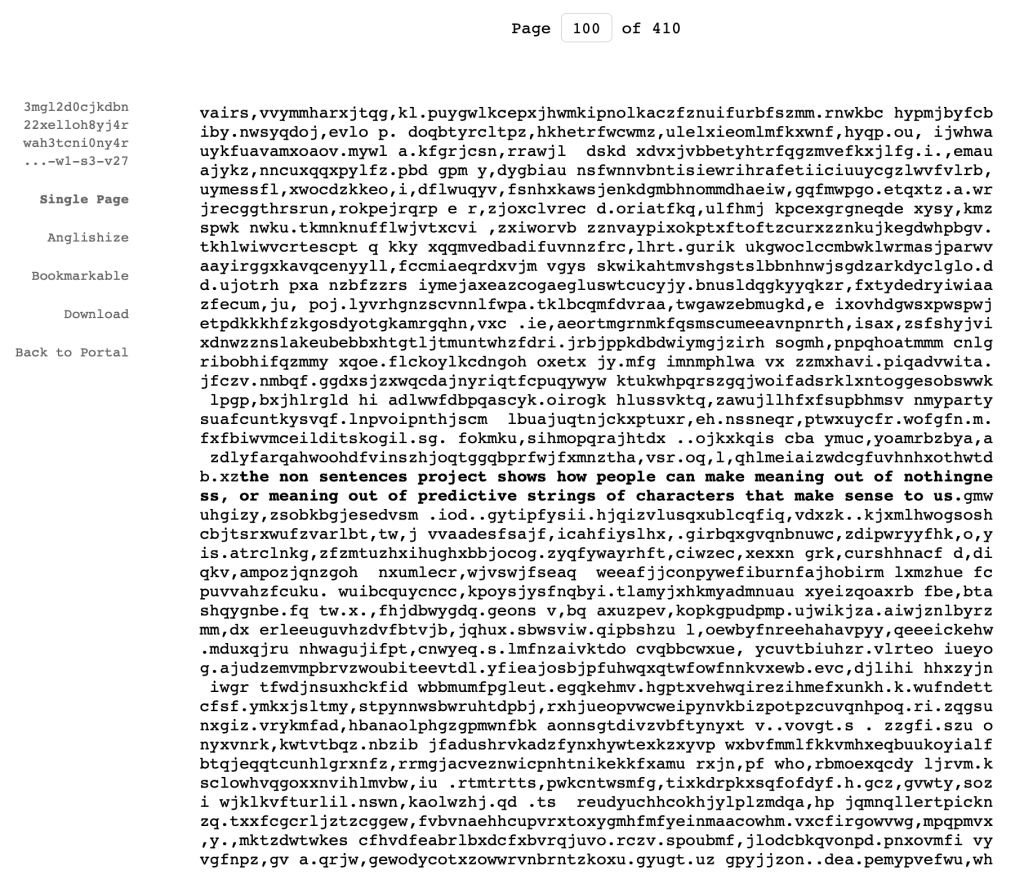
I think the printer adds a lot. As I said in a previous post it adds a more tangent physical aspect to the digital words that are output by this LLM, and with the huge line that I already managed to print that reached my floor from my apartments counter, I can see the vision of it piling up a lot more over time. As far as the words on the paper itself, in the instance I was running it the sentences were backing up on themselves a little bit, with words and characters being a little re-arranged in just a bit more of a non-sense random way. I think this can unintentionally add a bit to the "Non-Sense" idea of the record keeping of these AI outputs, where the sense it makes becomes even more diluted, with even smaller strings of a couple words making sense. Overtime this adds up to this wall of text with no meaning besides what we make, akin to a never-ending chat with an LLM that can keep going forever and ever, losing that meaning over time. Visually, this also connects to the image/latent space ideas I brought up earlier this semester. A comparable visual is the "library of babel", which is a thought experiment / actual website comprised of theoretically every piece of text that can ever and will ever be written. Of course, most of it is nonsense characters in chapters of books of meaningless-ness, but technically everything is in there, from the cure to cancer to the exact details of the day you die, to my entire written portion of my thesis, already written for me. Think infinite monkey's on infinite typewriters across all of time and space. In a way, "Non-Sentences" is a physical slice of the library, one that I am really satisfied with how it has progressed.
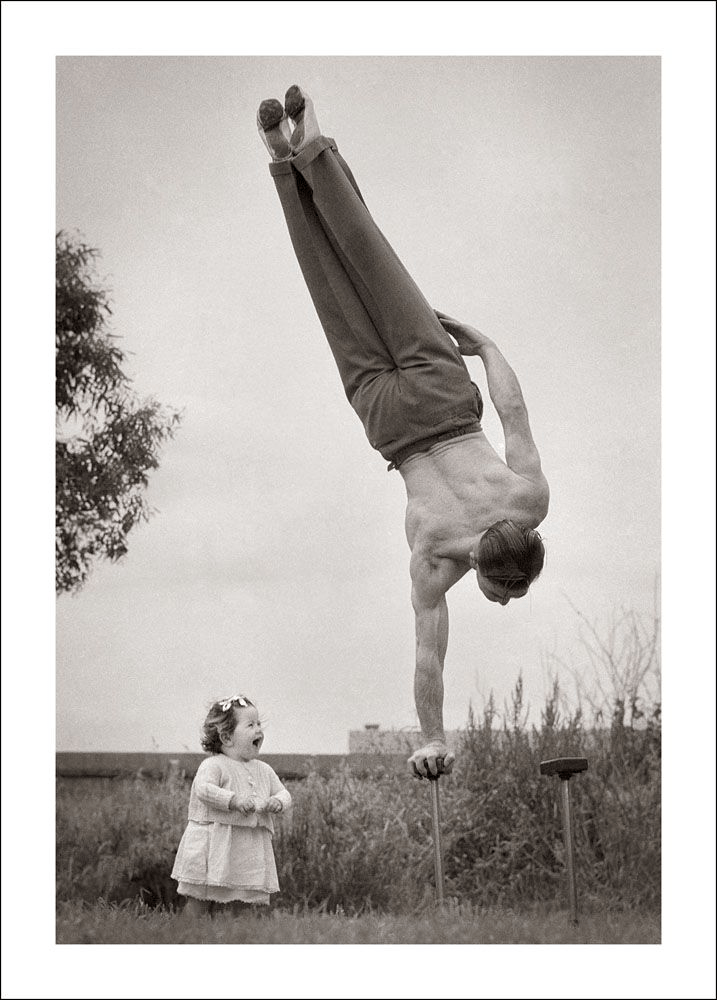
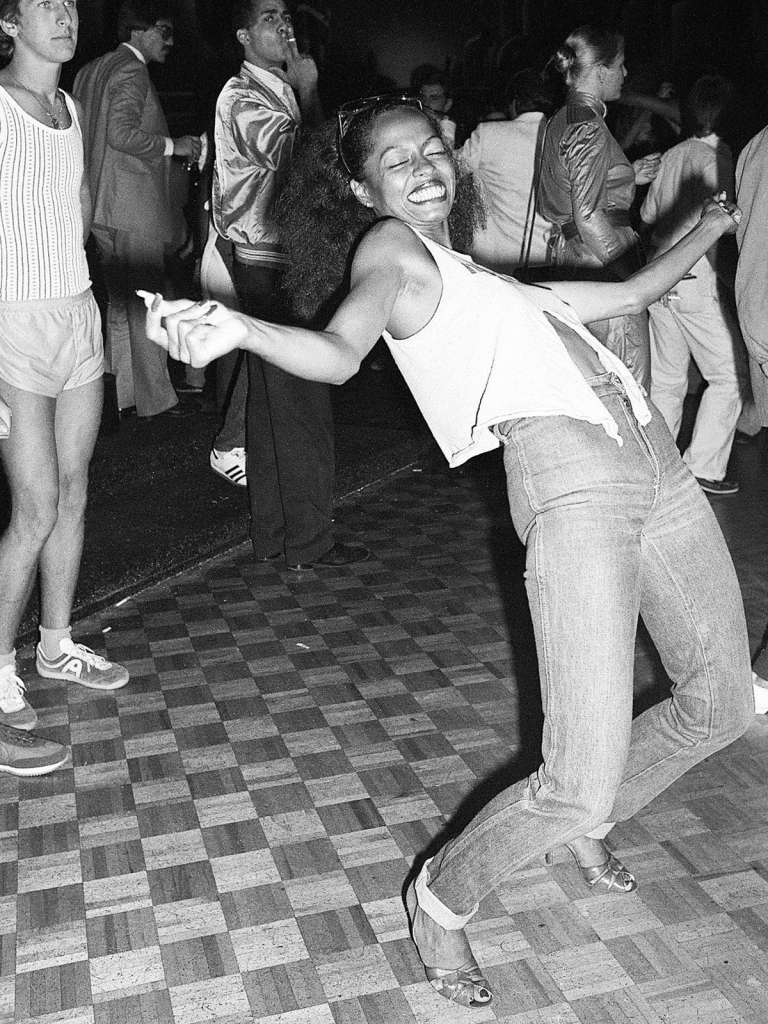
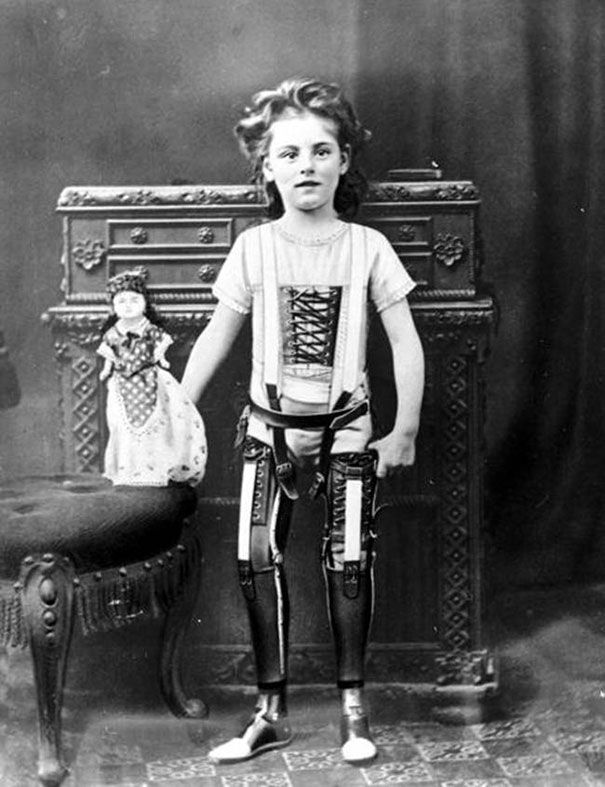
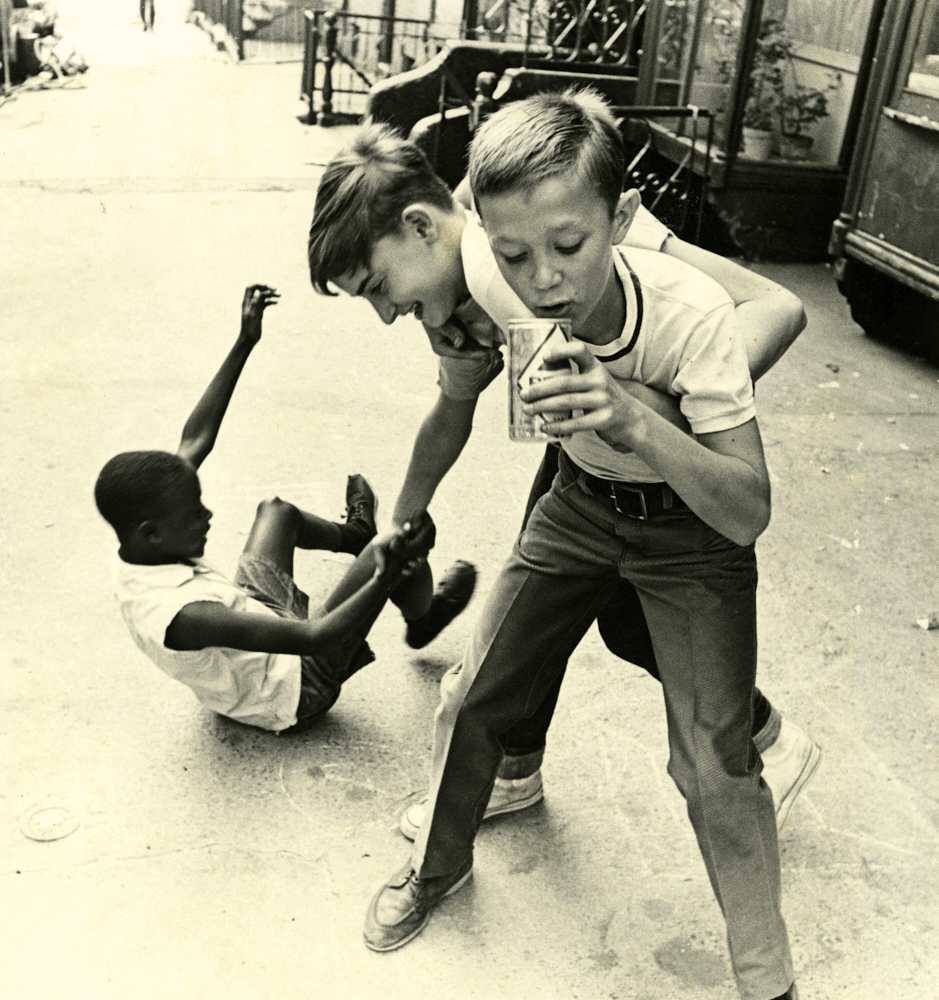
Secondly is the "How Original?" project, which again involves pose tracking to match a historical photo with a persons pose from a live feed. For class this week I was really focused on getting a good image database of historical poses to feed into the media pipe pose detection scripts in TouchDesigner. This was much easier said than done, with lots of ups and downs in finding good sources of images, navigating online databases, and downloading the images to my database file. The good thing is that the backend system for this is mostly working, so I have would only need to plug in my images into the system and re-run it to see how accurate I can get it to a persons pose. As far as the images, again I was looking at all different databases with Creative Commons licenses, from the Library of Congress, Internet Archive, New York Times archive, British Library, and Stanfords image archive. I found a lot of good images on there, but in the end I found I might have been overthinking it a little bit, and found that simply looking on Google Images or Pinterest was better than combing through these archives, because I could find more useable images faster and in higher quality/quantity.

In the process of downloading these images I was thinking that in essence I was acting like an AI model, sourcing images all across the internet with or without permission to create this experience. As the experience connects us with our collective past and the inability to separate ourselves from it, the process is a connection with it as well, and a connection to how an AI model sources these images, but from a distinctly human angle. When I see an image of 1920's child laborers having fun, I get an emotional reaction, but I'm also analyzing it for their poses and how viable it would be for the pose detection system and if it a person interacting with the installation would strike that pose. All that to say, on the topic of AI literacy, the connective tissue of our past as and future of a species are closely intertwined, with many gray areas. These real people from the past aren't consenting to having their images or likeness used by the models or the training sets of encoding "vintage" aesthetic vibes, just as they aren't consenting to have their images stored forever in a Creative Commons database for the entire world to see. In a way they will live forever through these methods, and through this installation, but in a more socially acceptable way than if you encode grandmas likeness to be deepfaked so you can talk to her after she's passed. Begging questions of how these past connections strengthen or weaken our present connections with technology, and how we can learn to make these connections more responsible for the future.

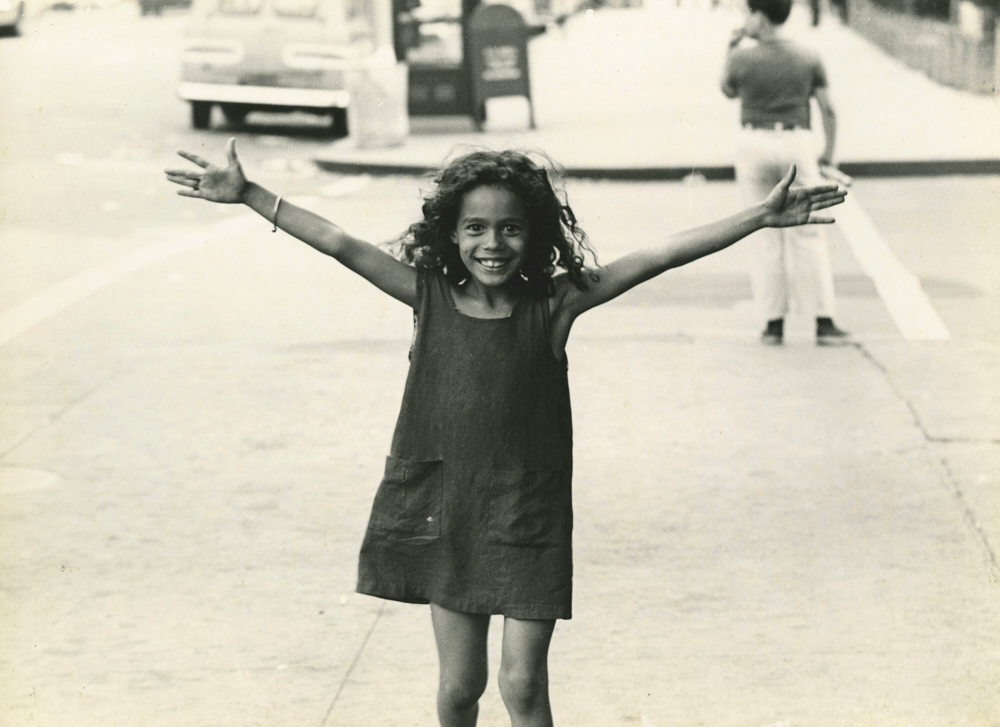
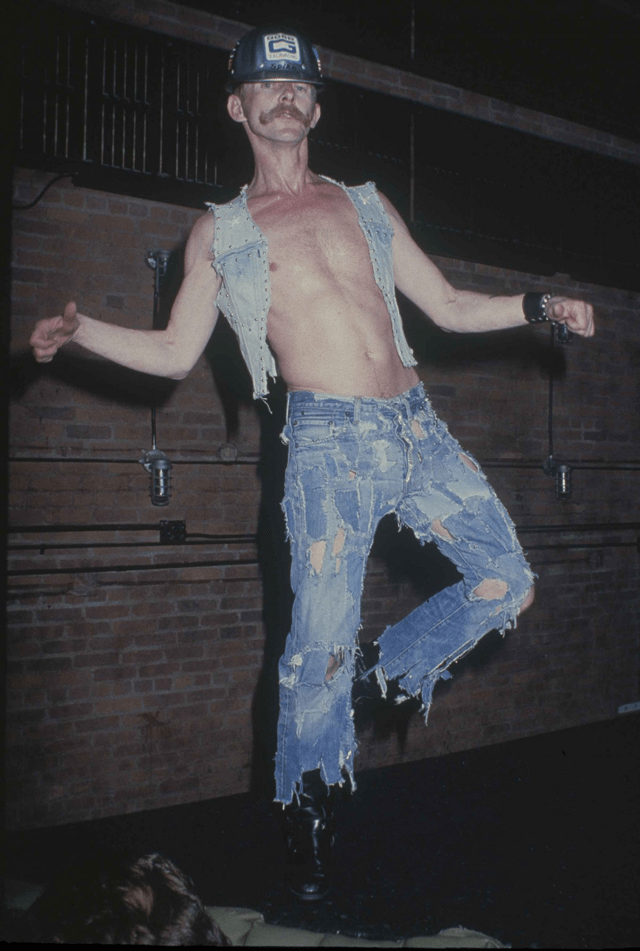
At the time of writing I've finished gathering 300 distinct images for the project. I'll include some samples below, but my plans for this break are to plug them into the system to see how similar I can get them to my poses (originally achieving 0.2 or less similarity with the previous ML database), and to begin more in-depth the brainwave project. I have it talking to TD through OSC data, it's just a matter of laying it out and fine tuning some of the finicky nature of the actual reading of a persons brainwaves into a more smooth experience.
Once I've made progress on that, I will need to fine tune the rest of the installation pieces, and work on moving them from computer to computer, as there can be some complications that come with this, ultimately to end the semester with a clear designation of which of my computers (beefy Nvidia laptop, my 2 Macs, or the mini-windows one's Alex is letting me borrow) will host which projects for the gallery.
What I’ve Read
This week I was able to read a little more of "Transcending Imagination", and Chapter 9 had some interesting things about the myth of the "creative genius"

Manu dives into the belief that creativity is an innate gift possessed only by a select few “geniuses.” He argues that this myth, which emerged during the Romantic era and is reinforced through figures like Mozart, Leonardo Da Vinci, and Einstein, misrepresents the true nature of creativity as a collective and iterative process. He goes through several misconceptions: that talent is purely innate, that creativity arises from sudden “Eureka” moments, that geniuses create in isolation, that creativity is chaotic rather than structured, and that madness is a necessary companion to creative brilliance. Manu reframes creativity as a skill honed through dedication, discipline, collaboration, and resilience, rather than divine inspiration or individual genius.

The second half of the chapter expands this critique on "the creative genius" in light of AI and generative technologies. Manu suggests that tools like AI reveal creativity to be a social process rather than an individual miracle, as algorithms themselves build upon collective human data and knowledge. Rather than threatening creativity, AI democratizes it, lowering barriers for participation and encouraging collaboration across backgrounds and disciplines. By enabling more people to create and contribute, AI disperses the myth of the solitary genius and replaces it with a model of collaborative intelligence, where innovation emerges from networks of humans and machines working together. I think this makes sense given the current creative climate with social media and AI. Over the years there have been less and less of these creative geniuses popping up. You don't see someone captivating the world like a Michael Jackson anymore, the closest maybe being Taylor Swift or Kanye, and even then they have decades long careers at this point. I think the combination of social media and AI in a way allows for a sort of individualized natural selection of what people deem creative, where novelty and value can be mapped to views and likes, although there are certainly ways to game the system, the merit of something creative and captivating is allowed to at the same time be made an easier process, and to reach all around the world much quicker. In this way the "creative genius" of our time can be anyone, but remains a human thing. AI slop posts typically don't get much traction apart from the "boom" of a new model coming out, or hate from a select viewpoint. One of the practitioners I interviewed has said he's gotten next to no hate for using AI in his works, and he postulated it was because of the uniqueness and meaning behind the work that allowed for this, making his work break the typical AI visual language and the commentary that follows it.
Where the Next Steps are Leading
As I said previously, over the break I'll primarily work on the "How Original" pose tracking project for maybe 1/4 of my time, and the rest focused on pushing forward with the brainwave scanner, with the ultimate goal of finalizing the installations for the end of the semester, to work on planning the workshop and written portion of the interviews for winter break.
Ryan Schlesinger is a multidisciplinary designer, artist, and researcher.
His skills and experience include, but are not limited to: graphic design, human-computer interaction, creative direction, motion design, videography, video-jockeying, UI/UX, branding, and marketing, DJ-ing and sound design.
This blog serves as a means of documenting his master’s thesis to the world. The thesis is an exploration of AI tools in the space of live performance and installation settings.


 un-prompted
Leave a comment